
The first weekend I owned the Gorilla Carts poly dump cart, I did not haul a single leaf. I spent forty minutes on my knees on the shop floor of my 10x12 shed, sorting bolts into an old coffee can and squinting at a fold-out instruction sheet that had more drawings than words. That is not what I expected from a cart that showed up on the porch in one taped box with a picture of a smiling family loading firewood.
I'm Emmett Braddock. I'm 71, and I've gardened this half-acre outside Burlington, North Carolina for 38 years, most of it on red clay that turns to soup every March. My wife Delia keeps asking when I'm going to slow down. My grandkids, Sawyer (9) and June (6), think every chore in this yard is a game until it stops being fun around minute fifteen. What follows is the honest version of what it's like to live with this cart, not the version you get from a five-star headline.
The Quick Verdict
Solid hauler once it's built and broken in, but budget a real hour for assembly and expect the tires to need attention on uneven ground.
Amazon Check Today's Price →Skip My Assembly Headache, Not the Cart Itself
I still recommend this cart. I just wish someone had told me to set aside a real hour and a clear workbench before I opened the box. See today's price and specs on Amazon before you plan your own first weekend with it.
Amazon Check Today's Price on Amazon →How I've Used It
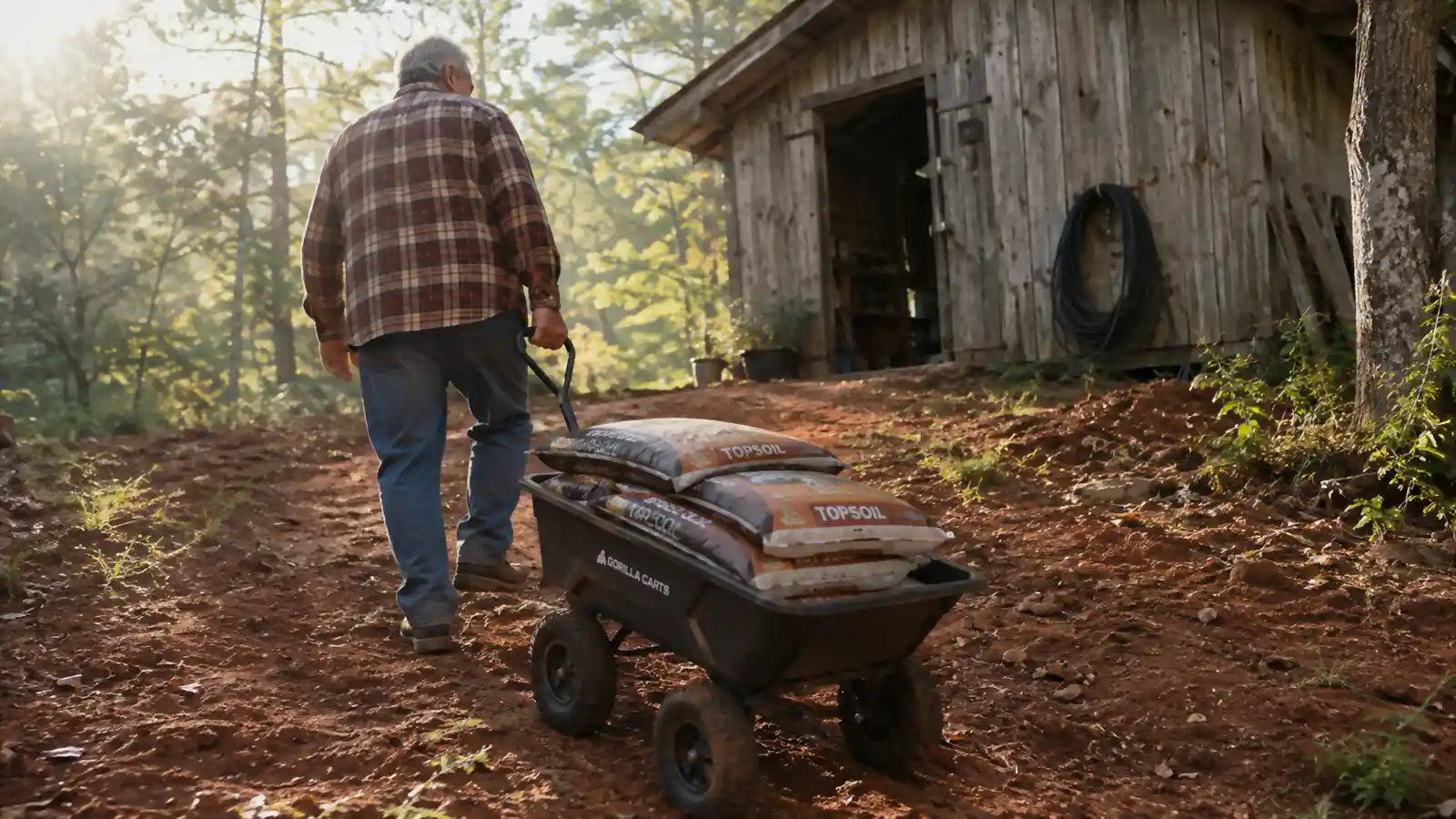
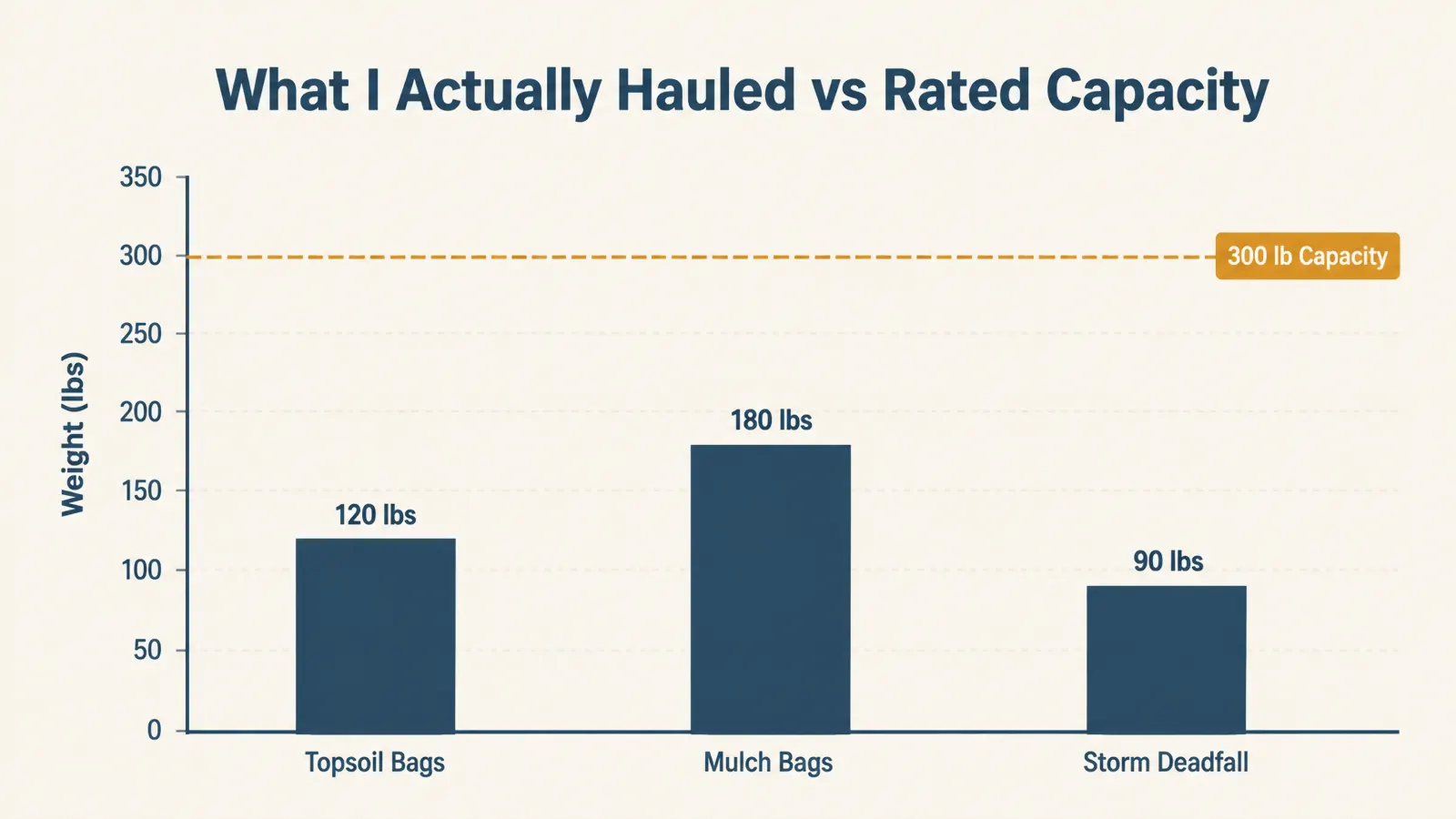
I've had the Gorilla Carts dump cart parked against the shed wall since last spring, and it gets pulled out for almost every job that involves moving something heavy across the yard instead of carrying it in my arms. Topsoil bags for the two raised beds I built back in 2019, pea gravel for edging, deadfall branches after a spring storm took a limb off the willow oak, bagged pine bark. If it's heavy and it has to go from the driveway to the back of the lot, this cart makes the trip instead of my back.
Most weeks it earns a simpler trip than a big fall cleanup. Delia has me hauling bagged pine straw out to the bed along the boxwoods, or I'm pulling a load of stepping stones toward a path Sawyer and I have been laying near the raised beds all spring. None of that is dramatic work. It's just steady, ordinary use, three or four short trips a week rather than one big haul, and that kind of routine use tells you more about how a cart holds up than a single dramatic load ever could.
For a full write-up on how it's held up hauling leaves and mulch over two full falls, I wrote a separate piece here: two falls of loading this cart with mulch and leaves. This review is different. I'm not here to sell you on the idea. I'm here to tell you the two things that annoyed me enough that I almost sent it back, and why I kept it anyway.
Both problems showed up early. One was the box itself, or more specifically what was inside it. The other showed up the first time I pulled a loaded Gorilla Carts cart across the slope at the back of my lot instead of a flat driveway. Neither one is a dealbreaker. Both are things I wish someone had told me before I opened the box.
Assembly Took Longer Than the Box Promised
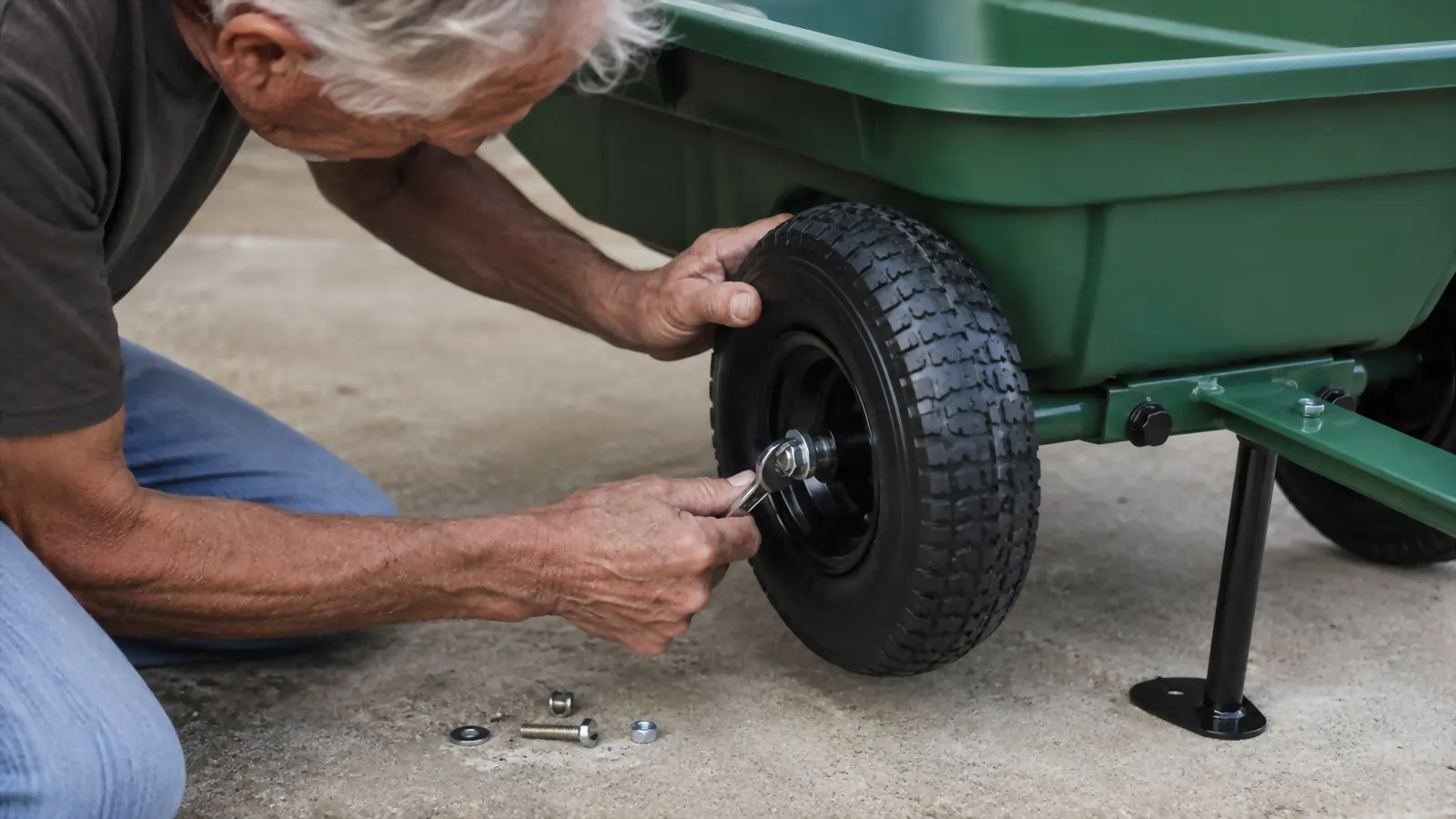
The box says some assembly required, which is technically true the way saying a swimming pool needs some water is technically true. What's in the box is the poly bed, a steel frame, two wheels, a tailgate, and a bag of hardware that isn't sorted by step. I laid everything out on my workbench under the pegboard in the shed and started matching bolts to holes, and it still took me close to an hour to get the Gorilla Carts cart from flat pieces to something I'd trust with 300 pounds of topsoil in it.
Part of the delay was mine. I don't rush hardware anymore, not since I stripped a bolt head on a mower deck years back and paid for it with a Saturday I didn't get back. But part of it was the cart. The bolts that hold the bed to the frame want a specific angle to thread cleanly, and if you get it wrong on the first try, you're backing it out and starting over. The instructions show you what goes where, they just don't show you how much patience it takes to actually seat it.
If you're the kind of person who wants to unbox something and be hauling within ten minutes, set that expectation aside for the Gorilla Carts dump cart. Give it a real hour, maybe more if you're doing it solo instead of with a second set of hands holding the frame steady. Once it's together, it stays together. I haven't had a bolt work loose since, but that first assembly session earns an honest complaint.
How the Tires Behave on Red Clay and Uneven Ground
The second thing nobody mentioned in the reviews I read before buying is how much the ride changes once you're off flat concrete. My driveway is smooth, and on it, the Gorilla Carts cart pulls easy even loaded heavy. The back of my lot is a different story. There's a slope down toward the property line, and the ground underneath is red clay that stays lumpy and uneven even after 38 years of me walking it.
On that slope, loaded with a couple bags of pea gravel, the cart wants to lean into every rut instead of rolling over it smoothly. The tires are solid enough, no flats to worry about, but they don't have much give, so every bump in the yard telegraphs straight up into the handle. I've had it tip sideways twice, both times on the slope with an uneven load, never on flat ground.
The fix, once I figured it out, was loading it smarter. Heavy stuff low and centered, lighter stuff on top, and I don't pull it across the slope anymore, I pull it up or down the grade instead of across it. That solved most of the tipping. But it took two ruined loads of gravel dumped sideways in the grass to learn it, and I'd rather you learn it here than the way I did.
The Dump Mechanism, and Where It Gets Gritty
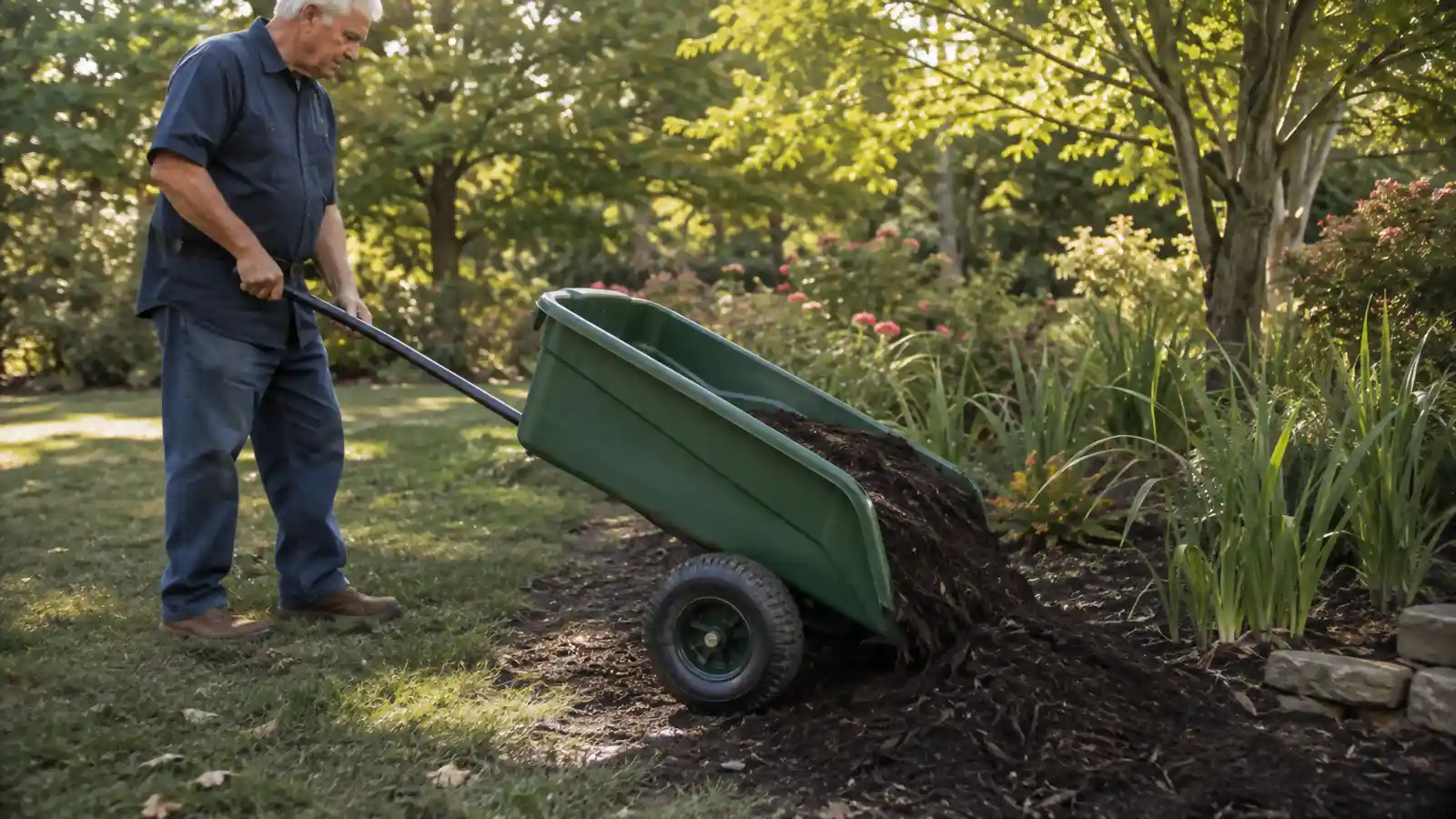
The whole appeal of a dump cart over a plain garden cart is the tailgate release. Pull the pin, tip the bed, and the load slides out without you lifting a single shovelful by hand. On the Gorilla Carts cart, that mechanism works exactly like it's supposed to when everything's clean. Mulch, topsoil, gravel, it all dumps in one smooth motion.
Where it gets gritty, literally, is after a few months of use. Fine debris works its way into the pivot points where the bed hinges and where the release pin seats. Mine started sticking a little by midsummer, just enough that I had to give the pin a firm tug instead of a light one. A quick spray of the hinge with a household lubricant and a rinse with the hose fixed it, but it's maintenance the box doesn't mention.
I also learned the bed flexes more than I expected when it's loaded wet. A load of rain-soaked pine bark mulch has some real weight to it, and the poly bed bows slightly in the middle under that kind of load. It hasn't cracked or split on me, but I noticed it, and if you're hauling near that 300-pound capacity regularly, I'd keep an eye on the bed rather than assume poly holds its shape forever.
Keeping It Working Through the Season
The dump pin issue taught me to build a small habit into the season instead of waiting for something to stick. Every few weeks, usually on a Saturday when I'm already out at the shed, I hose down the bed, wipe the pivot points, and give the hinge a light spray of lubricant. It takes about five minutes and it's kept the Gorilla Carts cart working the way it did the first week, instead of the way it started working by midsummer before I caught on.
I also stopped leaving it outside uncovered once I noticed the wheels picking up grit faster on days I left it parked near the garden instead of back in the shed. Now it goes on its hooks on the pegboard wall most nights, out of the weather, and that alone has cut down on how often the pin sticks. None of this is complicated. It's just the kind of small upkeep that doesn't make it onto the product page, and it's the difference between a cart that works smoothly all season and one you're fighting with by August.
What It Actually Does Well
I don't want this to read like I regret buying it, because I don't. Once you get past assembly and learn how it handles a slope, the Gorilla Carts cart earns its spot by the shed door. The two-wheel design means I can steer it one-handed around the raised beds without the whole load shifting, which is something a wheelbarrow never let me do without both hands and a fight for balance.
It's also just the right size for how I actually garden. The 4 cubic foot bed holds enough topsoil for one raised bed refill or enough mulch for a full pass around the boxwoods along the drive without needing three trips. Small enough that Sawyer, at 9, can help push it on flat ground while I steer, which turns a chore into something he actually wants to do.
It also handles the transition between grass and driveway better than I expected, which matters more than it sounds like it would. The wheels roll up over the lip at the edge of the driveway without me having to horse the handle sideways, and that's the kind of small detail that either makes a tool part of your everyday routine or makes you find reasons to leave it parked.
And it folds down flat enough to lean against the shed wall next to the rakes, instead of eating up floor space the way a wheelbarrow does. For a shed that's already crowded with 38 years of accumulated tools, that matters more than I expected it to when I bought it.
Alternatives I Considered
Before I bought this one, I looked hard at a plain single-wheel wheelbarrow, the kind I'd used for most of my 38 years in this yard. I wrote up the full comparison separately, Gorilla Carts against a traditional wheelbarrow, because it's a closer call than you'd think for some jobs. A wheelbarrow is more nimble in tight spots between the raised beds, but it demands more from your arms and your balance, and at 71 that trade stopped making sense for me.
I also looked at a couple of other two-wheel poly carts before settling on this one, mostly on rating count and how many owners mentioned the wheels holding up over time. The Gorilla Carts brand had the deeper track record of the ones I compared, which is part of why I went with it despite the assembly gripe. A cart I trust for years matters more to me than one that unboxes faster and doesn't last.
What I Liked
- Two-wheel design steers easily around raised beds and tight corners
- Tailgate dump mechanism saves real shoveling once it's clean and lubricated
- 4 cubic foot bed is the right size for one raised bed refill or a full mulch pass
- Folds flat for storage against the shed wall
- Handles the rated 300-pound capacity without the frame itself flexing
Where It Falls Short
- Assembly took close to an hour and the hardware isn't pre-sorted
- Tires transmit every bump on uneven or sloped ground and it can tip on a loaded sideways pull
- Dump pin and bed hinges need occasional cleaning and lubrication to keep working smoothly
- Poly bed shows some flex under heavy, wet loads near capacity
The Gorilla Carts cart never once let me down when it mattered. It just made me work for that trust in the first hour, and again every few months when I clean the pin.
Who This Is For
This cart makes sense for anyone gardening on more than a small patch, especially if your yard has any grade to it at all. If you're hauling mulch, topsoil, gravel, or deadfall branches more than a few times a season, the two-wheel balance and the dump mechanism save real effort compared to a wheelbarrow or a bucket brigade. It's also a good fit if storage space is tight, since it folds flatter than most alternatives. I'd especially recommend it to anyone past middle age who's noticed, like I have, that the wheelbarrow fights back more than it used to. Just plan for that first assembly session and don't expect it to be a ten minute job.
Who Should Skip It
If your yard is entirely flat and small, a plain wheelbarrow or a simple garden cart might do the job for less hassle, since you won't run into the tipping issue I hit on my sloped ground. Anyone who wants to unbox and use immediately, with zero patience for hardware assembly, is going to be frustrated in that first hour even though the end result is solid. And if you're hauling near the 300-pound capacity on a regular basis with consistently wet, heavy loads, I'd want you to go in knowing the poly bed does flex some, even if it hasn't failed on mine. For occasional light use on flat ground, you may be paying for capability you won't use.
Don't Learn the Slope Lesson the Hard Way
Load it low and centered, keep the pin clean, and this cart will earn its spot by your shed door too. See current availability and the full listing details on Amazon.
Amazon Check Today's Price on Amazon →