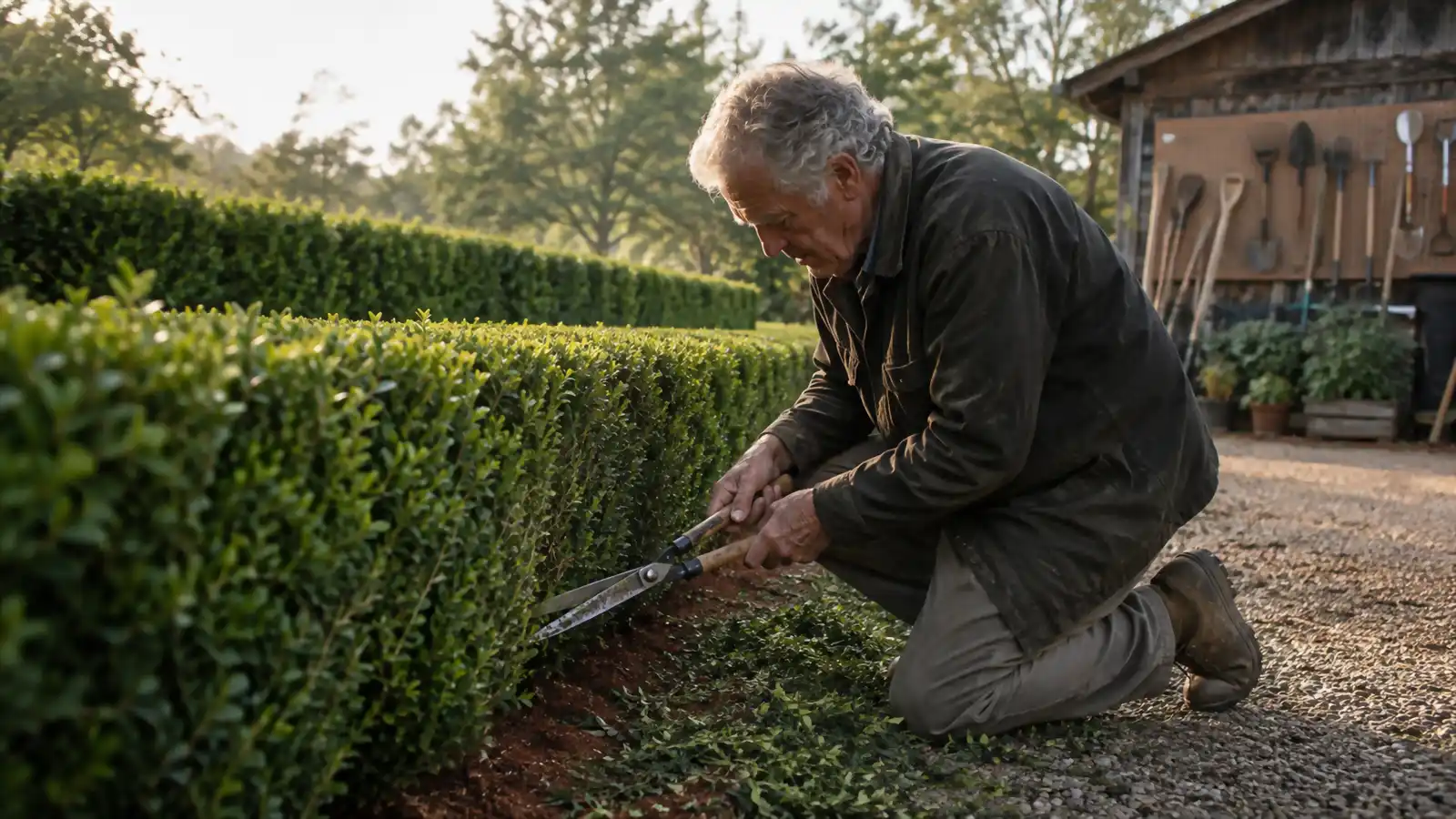
I've been gardening this same half-acre outside Burlington, North Carolina for thirty-eight years, and in that stretch of time I've gone through more pairs of pruning shears than I care to count. The Felco F2 is the first one that made it past two seasons without something going soft in the joint or the spring giving out on me. I bought mine in the spring of 2021, mostly because my neighbor down the road wouldn't stop talking about his. Five seasons later, it's still the pair I reach for every March when I walk out to the two raised beds Delia and I built back in 2019.
Before the Felco, I'd worked through a string of home-center shears that looked fine on the rack and turned to junk by August. Two of them left blisters across my palm by the time I'd worked my way down the boxwood row along the drive. This soil back here is red clay with a slope at the back of the lot, and anything that isn't well built shows its weakness fast when you're out there three or four days a week from March through November. I wanted something that would hold an edge and hold together, and I figured a Swiss-made pair had earned the right to cost more than the others.
The Quick Verdict
After five seasons of near-daily use, the Felco F2 has earned a permanent spot on my belt. It costs more than a home-center pair, but it's outlasted three of those combined, and it still makes a cleaner cut than anything else hanging in my shed.
Amazon Check Today's Price →Tired of Shears That Quit Halfway Through Pruning Season?
I went through three cheap pairs before I stopped replacing shears every year and just bought the one that lasts. Check today's price on the Felco F2 and see the current rating for yourself.
Amazon Check Today's Price on Amazon →How I've Used It
I'm not a landscaper and I don't have a fleet of clients, so my testing isn't scientific. It's just what a retired man with a half-acre lot actually does with a tool, week after week, for five years. That means deadheading roses along the back fence, trimming the boxwood hedge that runs the length of the drive, taking dead limbs off the low branches of the willow oak that shades most of the yard, and cleaning up whatever the grandkids knock loose when they're helping.
Sawyer is nine now and June just turned six, and both of them like to gather the clippings into a wheelbarrow while I work, which means the Felco F2 has spent a fair amount of time being handed to a curious nine-year-old who wants to see how it locks shut. It's held up to that kind of handling fine, the safety catch is simple enough that I trust it, and it's never pinched a finger on either of them, though I keep a close eye regardless.
In a normal week during the growing season I'll use the shears anywhere from twenty minutes to an hour and a half, depending on what's overgrown. That adds up over five seasons to something like a few hundred hours of actual cutting, on wood ranging from soft green rose canes to half-inch deadwood off the oak. The Felco F2 is rated for stems up to about three-quarters of an inch, and I've pushed past that on a few stubborn boxwood stems without the blade rolling or the handles springing apart.
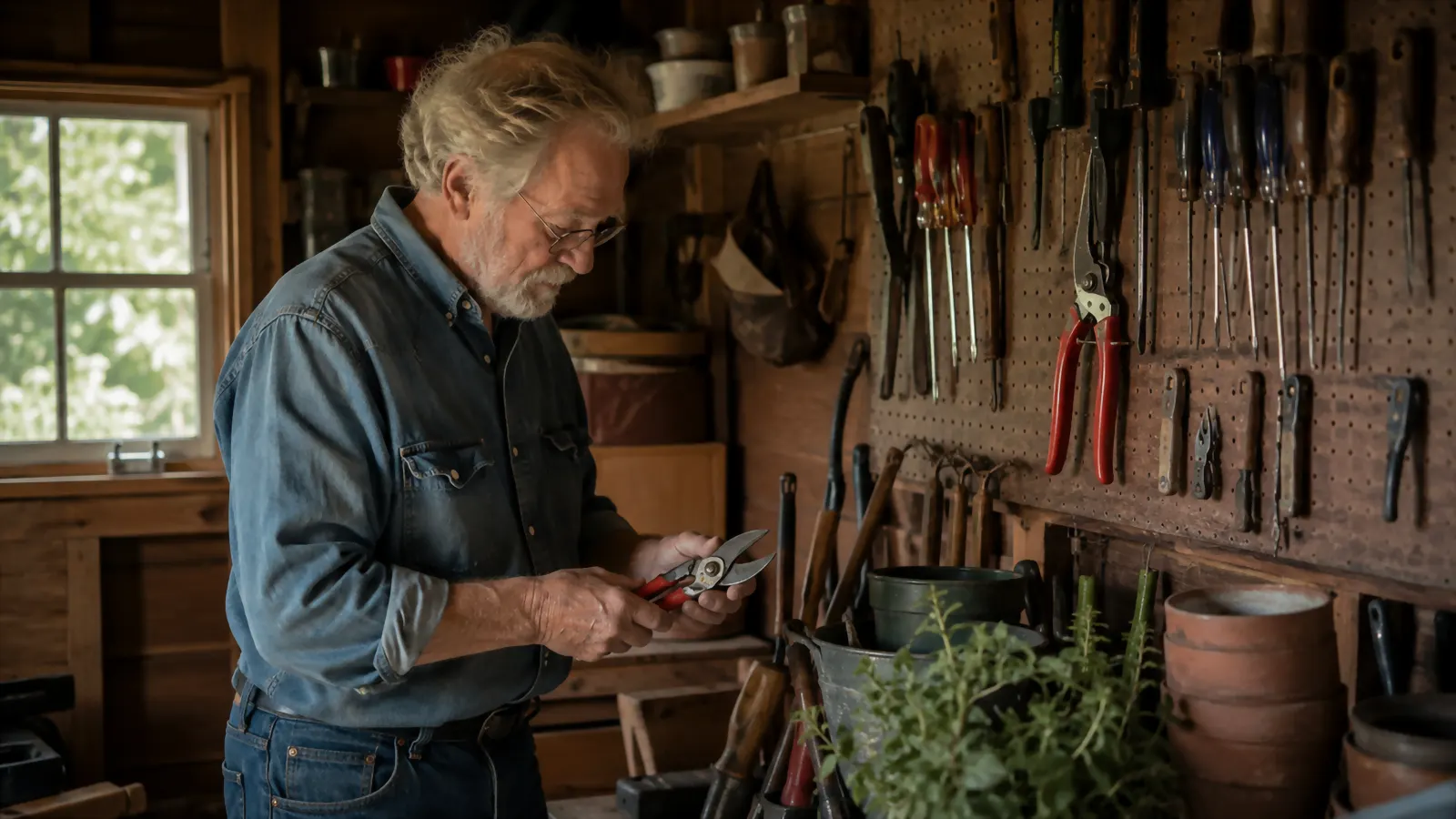
I keep the shears in a leather holster clipped to my belt, which I didn't buy until the second season and wish I'd had from the start. Before that I was setting the pair down on the edge of a raised bed or leaving it on the tailgate, and I'd lost track of it more than once. Once it lived on my belt, it stopped being a tool I hunted for and started being something I just reached down and used, the same way I'd reach for a pocketknife.
The Cut Itself: Why the Bypass Blade Matters
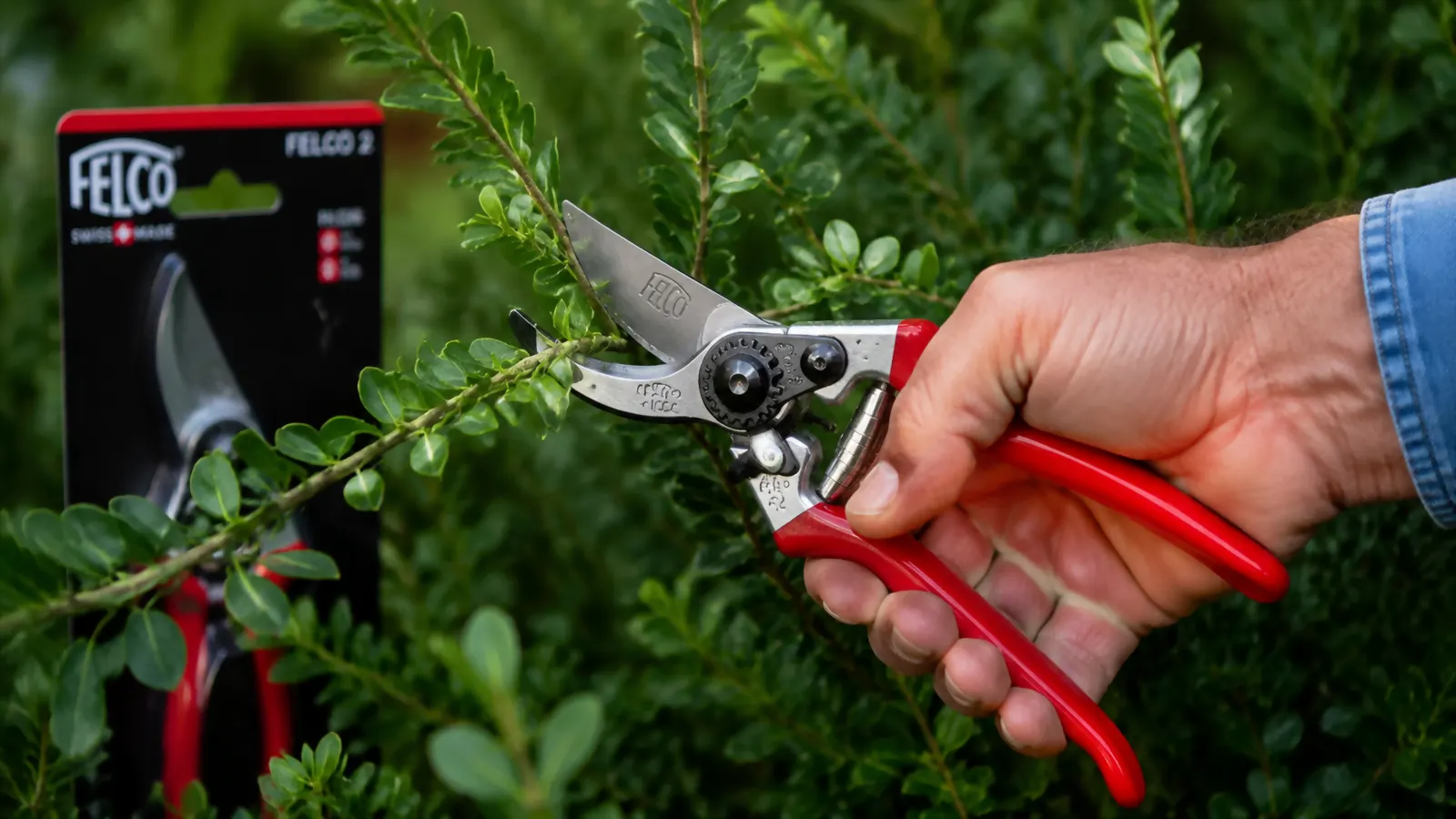
The Felco F2 is a bypass design, meaning the sharpened blade slides past a curved lower jaw rather than crushing the stem against a flat anvil. I didn't think much about that distinction until I compared cuts side by side. A crushed cut leaves the stem tissue mashed and slower to heal, which matters most on roses and any live wood you actually want to keep growing well. A clean bypass cut on the same cane looks almost surgical by comparison, a flat angled slice with no ragged edge.
The blade on the Felco is hardened steel with a coating the company calls a non-stick finish, and in practice that means sap doesn't build up on it the way it did on my old shears. I used to have to scrub dried sap off the blade every couple of weeks in peak season. With the Felco, a quick wipe with an oiled rag after a long afternoon in the beds is enough to keep it moving smoothly through the next cut.
What surprised me most is how the Felco F2 handles rose canes specifically. Roses have always been the plant that punishes a dull or poorly aligned blade, because a bad cut on a cane invites disease into the wound. Five seasons of pruning the same rose bed, and I haven't lost a single cane to dieback that I could trace back to a bad cut. That's the kind of thing you only notice in hindsight, comparing this season to the ones before I owned the tool.
Five Seasons of Wear, and What I've Actually Replaced
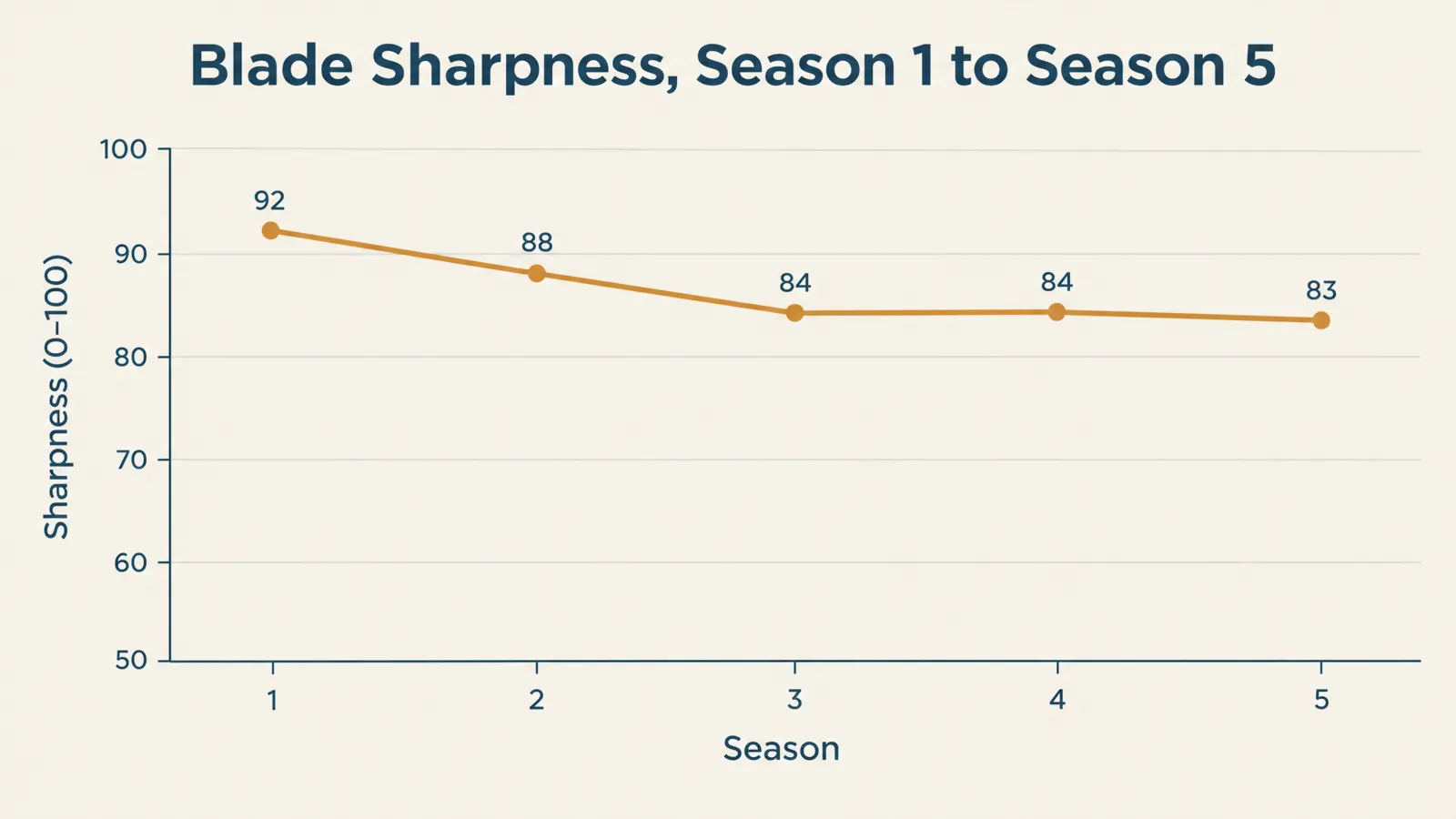
I'll be straight about the maintenance, because a five-season review that skips it isn't honest. The Felco F2 is not a tool you buy and forget. I sharpen the blade by hand two or three times a season with a small diamond file, and I resharpened it more thoroughly once, in year three, after a stretch of cutting through some gritty, clay-caked deadwood that dulled the edge faster than usual.
The spring and the small locking catch are both replaceable parts, which I only found out after I looked into it, and I haven't needed either yet. That's the piece that impressed me most about owning a Felco. My old shears weren't built to be repaired at all, they were built to be thrown out. This one comes apart with a single bolt if you ever need to swap the blade or the spring, and Felco sells the individual parts instead of forcing you to buy a whole new pair.
The red handles have faded some from five seasons of sun, and there's a scuff on one grip where I dropped it off the tailgate of my truck in year two. Cosmetically it looks its age. Mechanically, the joint tension is exactly what it was when I bought it, no wobble, no play side to side. That's more than I can say for anything I owned before it.
If I stack up what I spent replacing cheap shears roughly once a season for years against the cost of the Felco over the same stretch, the math works out in the Felco's favor by year three, and every season after that has just been the shears doing their job without another purchase. I'm not one to do fancy spreadsheets on garden tools, but even a rough tally in my head told me the same thing.
The Grip, the Weight, and My Hands at 71
I'm seventy-one, and my hands aren't what they were twenty years ago. I don't have arthritis, but I do notice fatigue faster than I used to on any tool that fights me. The Felco F2 weighs a little more than the flimsy shears I'd been using, but the weight is balanced toward the blade in a way that actually does some of the cutting work for you, so I don't feel like I'm squeezing as hard to get through the same stem.
The handle shape is fixed rather than the rotating style Felco offers on some of their other models, and for me that's been fine. My hand is average sized and the grip fits it without rubbing wrong. If you've got smaller hands or you're prone to hand fatigue, it's worth knowing Felco makes a rotating-handle version built for exactly that, but I've never felt I needed to switch after five seasons on the standard F2.
What I notice most, honestly, is what doesn't happen anymore. I used to finish an afternoon of pruning with a stiff, cramped hand that took an hour to loosen back up. With this pair, I can spend a full morning on the boxwoods and my hand feels normal by lunch. That alone has kept me pruning longer into each season than I used to.
What I've Compared It To
I do own a pair of Fiskars shears too, mostly for lending out when one of the neighbors needs a quick pair and I don't want to hand over the Felco. The Fiskars pair is lighter and cheaper, and it's fine for light work, but the cut quality isn't in the same category, and the joint on that pair already has more play in it after two seasons than my Felco has after five. I go into more detail on that side by side in the honest review if you want the full breakdown of tradeoffs.
If you're trying to decide whether the extra cost is worth it before you've read a full review, I put together a shorter rundown of the specific reasons I keep this pair on my belt every season, which you can find in 10 reasons the Felco F2 earns its keep. Between the two pieces, I think it covers most of what I wish I'd known before I bought mine.
What I Liked
- Bypass blade leaves clean cuts that heal faster, especially noticeable on roses
- Every part is replaceable, so a worn blade or spring doesn't mean buying a new pair
- Joint tension has held steady after five seasons with no wobble
- Sap doesn't build up on the blade the way it did on cheaper shears
- Handles a wide range of stem sizes from soft green growth to half-inch deadwood
Where It Falls Short
- Costs noticeably more than a home-center pair
- Needs occasional hand sharpening to stay at its best, it's not a set-it-and-forget-it tool
- Fixed handle shape may not suit smaller or fatigue-prone hands as well as Felco's rotating models
- Red paint on the handles fades and scuffs with years of outdoor use
A tool that stays sharp is a tool that actually gets used. The Felco F2 is the first pair I've owned where sharpening it felt worth the ten minutes instead of a chore I kept putting off.
Who This Is For
If you're out in your beds regularly, not just twice a year, the Felco F2 makes sense. Anyone with roses that need real attention, a hedge that has to be kept in shape, or a yard with enough deadwood to clear every season will get their money's worth out of a tool that holds an edge and doesn't fall apart. I'd also point to anyone whose hands tire easily on cheap tools, because the balance on this one does noticeably less damage to your grip over a long afternoon.
Who Should Skip It
If you've got a handful of houseplants and maybe one small shrub you trim twice a year, you don't need what the Felco F2 is built for. A basic pair from the hardware store will do that job fine, and there's no sense paying more for durability you'll never test. This is a tool for people who prune often enough that a shear's weak points actually get found.
Five Seasons In, Still My First Choice Off the Pegboard
I've replaced plenty of tools in thirty-eight years of gardening this lot. This isn't one of them. See the current price and rating on the Felco F2 for yourself.
Amazon Check Today's Price on Amazon →