
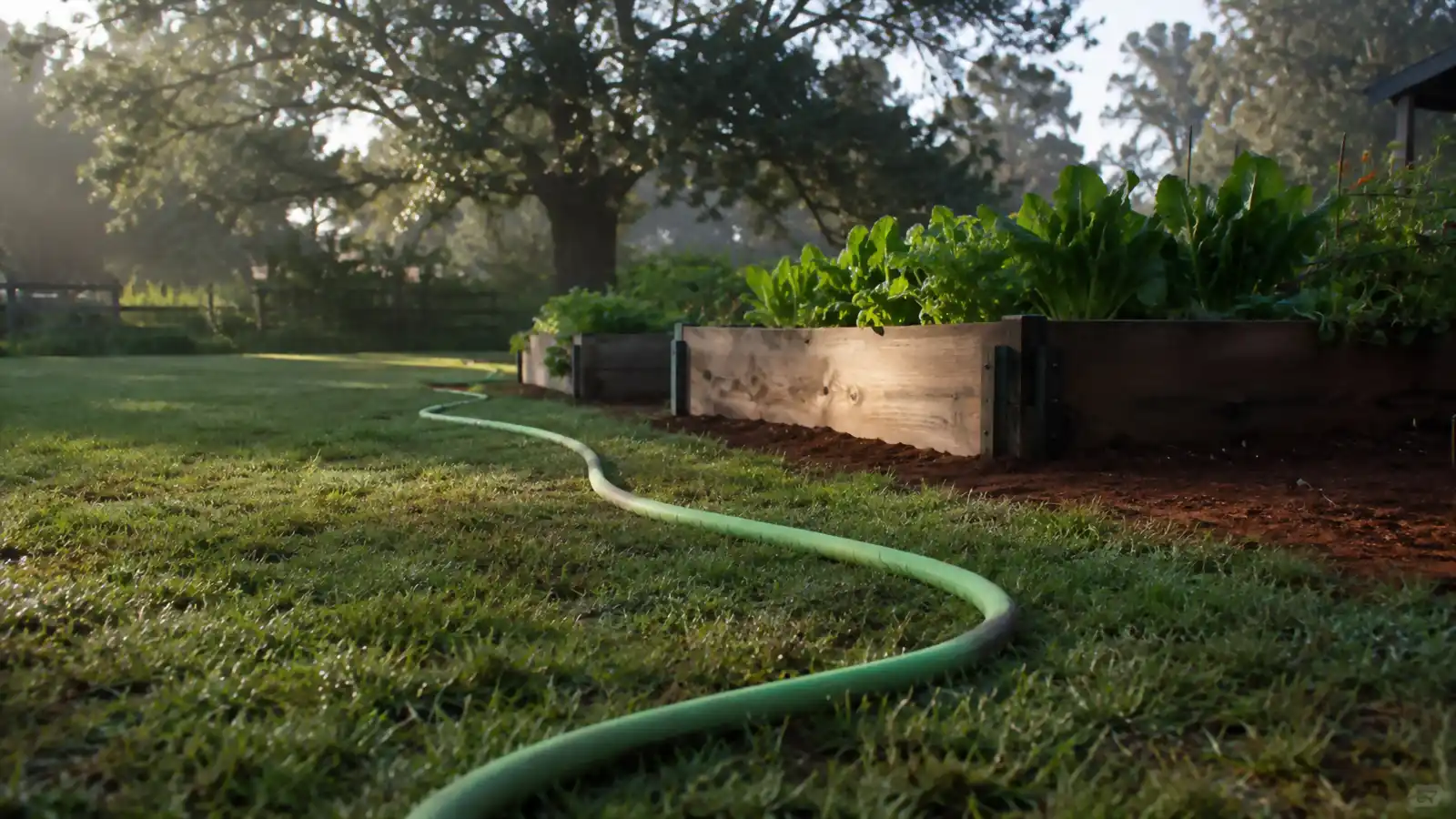
I've been dragging hoses around this half-acre outside Burlington, North Carolina for thirty-eight years, and my back has opinions about every one of them. Last March I put a Flexi Hose into rotation to replace the heavy rubber hose I'd been hauling between the spigot and the two raised beds Delia and I built back in 2019. I wanted something I could carry with one hand instead of dragging like a dead snake across the yard, and I wanted to see if it would actually hold up over a full season of daily use, not just the first few good-weather weeks everybody reviews a hose during.
This is that full-season account, March through November, on red clay soil with a slope at the back of the lot that makes any hose fight you a little on the way down. I'm not going to tell you the Flexi Hose is the last hose I'll ever buy, because by the end of the season I had a pretty clear sense of where it starts to wear. But I want to be fair about what it did well too, because for eight months it made watering easier than it had been in years, and that's worth writing up honestly either way.
The Quick Verdict
The Flexi Hose is genuinely lighter and easier to store than any rubber hose I've owned, and it earned its keep for most of a season. It's not the hose that lasts forever, and I want to be upfront about that before you spend a dime.
Amazon Check Today's Price →Tired of Hauling a Heavy Hose Across the Yard Every Evening?
I put the Flexi Hose to work watering two raised beds and a boxwood row for a full season. See today's price and the current rating for yourself before you decide.
Amazon Check Today's Price on Amazon →How I've Used It
My routine is simple and it doesn't change much from March to November. I water the two raised beds most mornings, hit the boxwood row along the drive maybe twice a week depending on rain, and use the hose for whatever the grandkids get into when they're over. Sawyer is nine and June just turned six, and both of them think watering the beds is a job worth fighting over, which means the Flexi Hose has spent a fair amount of time being dragged, dropped, and occasionally stepped on by two kids who mean well.
I hooked the Flexi Hose up to the same spigot I've used for decades and ran it out to the beds and back most days. On a normal week that's maybe twenty to thirty minutes of actual water running through it, sometimes more in a dry stretch of July or August. Over eight months that adds up to a real number of hours under pressure, expanding and contracting, coiling up small and stretching back out, which is exactly the kind of repetitive stress that tells you whether a tool like this is built to last or just built to look good on the shelf.
What sold me in the first week was how little it weighed once it filled with water and stretched out. My old rubber hose felt like dragging a length of chain across the lawn by the time I got it to the far raised bed. The Flexi Hose, even at full expansion, was light enough that I could carry a loop of it in one hand while I held the nozzle in the other. For a man who's seventy-one and dealing with a slope at the back of the lot, that difference mattered every single morning, not just on the good days, and it's the reason I kept choosing it over the old hose even after I knew where the trouble spots were.
The Expand-and-Collapse Design, and What It's Actually Like
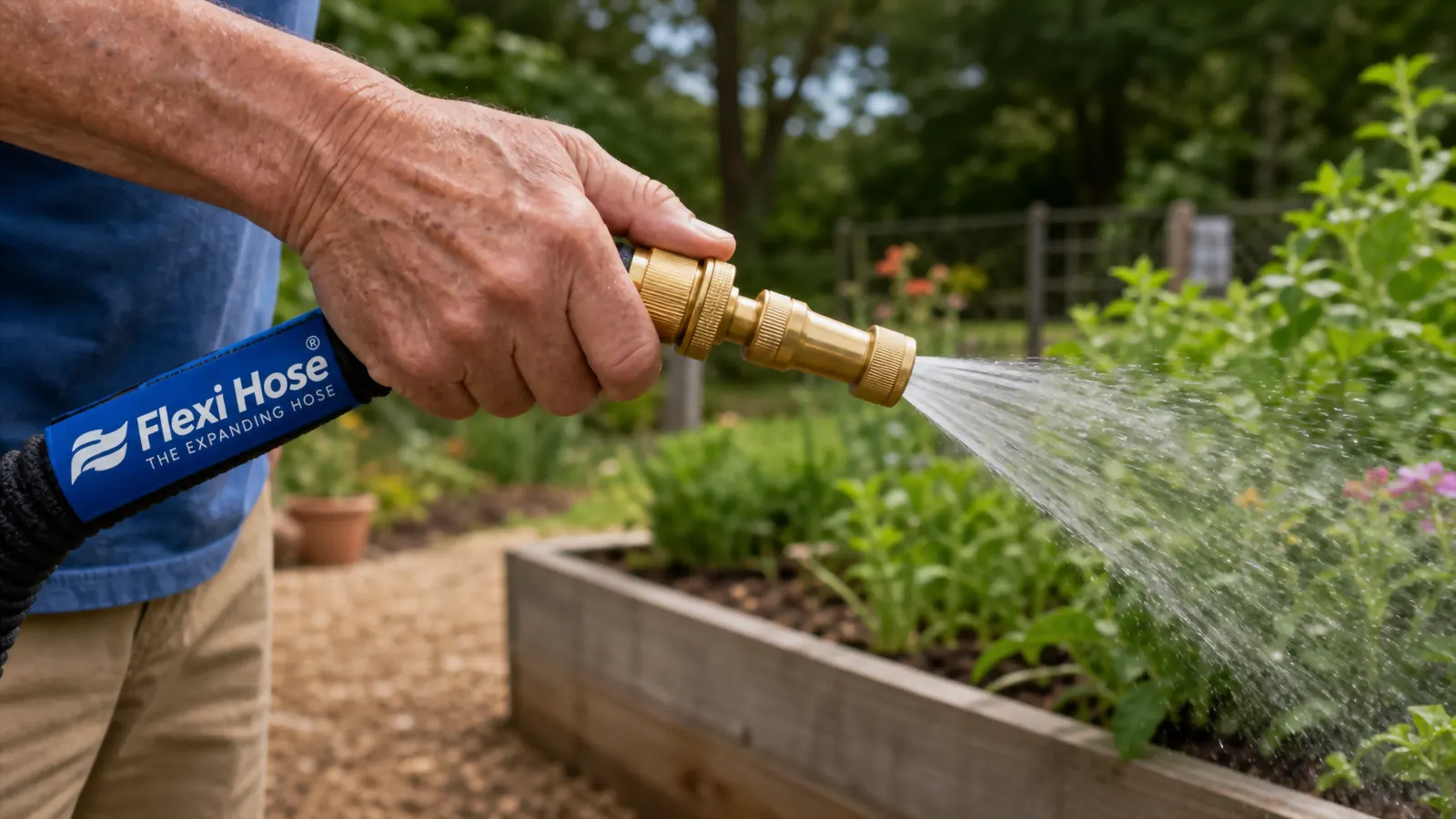
The whole idea behind the Flexi Hose is that an inner tube expands under water pressure and shrinks back down once the water's off, so you're not storing fifty feet of stiff rubber that fights you every time you try to coil it. In practice that's true, and it's the single biggest reason I kept reaching for it over the old hose. Turn the spigot on, the hose stretches out to its full length in a few seconds, and when you shut the water off it shrinks back down to something you can loop over one arm and carry into the shed.
The solid brass fittings on both ends held up better than I expected given how light the rest of the hose feels. Brass connectors don't strip out the way the cheap plastic ones do, and I never had a leak at the spigot end all season, even with June cranking it on and off more times than any hose should reasonably tolerate. That's a real point in the Flexi Hose's favor, and it's worth saying plainly instead of glossing over it just because other parts of the hose gave me trouble later on.
Where the Flexi Hose earns its no-kink reputation is on tight turns around the raised beds and through the gap between the boxwoods where a rigid rubber hose used to catch and kink every single time. The expandable design just doesn't hold a kink the same way, because there's nothing rigid enough in the tube to crimp shut on itself. I can't remember a single afternoon this season where I had to walk back and unkink the Flexi Hose the way I used to with the old one, and that alone saved me some frustration on days when I just wanted to get the watering done and get back inside.
The Nozzle and Water Pressure Over a Full Season
The bundled spray nozzle isn't fancy, just a basic multi-pattern head, but it did the job all season without jamming or sticking on me, which is more than I can say for a couple of cheap nozzles I've worn out over the years. I mostly kept it on a gentle shower setting for the raised beds, since a hard jet setting can beat down young seedlings, and switched to a tighter stream for rinsing off tools or knocking dirt loose from the pegboard shed floor after a muddy afternoon.
Water pressure through the Flexi Hose felt consistent through most of the season, though I noticed it drops off a bit once the hose is fully expanded and you're running it at the far end of its fifty feet. That's not unique to this hose, most expandable designs lose some pressure at full stretch, but it's worth knowing if you're planning to water something at the very end of the run. For my raised beds, which sit closer to the middle of the yard, it never gave me trouble reaching them with decent flow.
Where It Started to Show Its Age
Here's the part I want to be honest about, because a long-term review that skips the wear isn't worth reading. Around the end of August, after roughly five months of near-daily use, I noticed a small bulge developing in the outer fabric layer near one of the brass fittings, right where the hose flexes most when I'm dragging it around the corner of the shed. It wasn't leaking yet, but I could see the inner tube pressing against a weak spot in the woven cover, and anybody who's owned an expandable hose before knows exactly where that ends up if you keep using it.
By late September that bulge had turned into a small split, just a couple inches long, right at the collar where the fitting meets the fabric sleeve. It's a known weak point on expandable hoses generally, not just this one, and mine reached that point after roughly six months of regular use on a fairly demanding routine. I patched it with a bit of rubber tape to finish out the season, which held fine through October and most of November, but I wouldn't call that a permanent fix and I don't think the hose itself would either.
I want to be clear that this isn't a rare defect story or a one-off bad unit. Expandable hoses as a category have a real reputation for failing at the collar or splitting somewhere along the fabric cover after a season or two of regular use, and the Flexi Hose followed that pattern closely enough that I'd be doing you a disservice to pretend otherwise. The listing rating on this one runs lower than most of the other tools I've reviewed on this site, and after a full season with it, I understand why. It's not a hose that outlives you. It's a hose that does a specific job very well for a specific stretch of time.
Weight and Storage, the Category's Real Strength
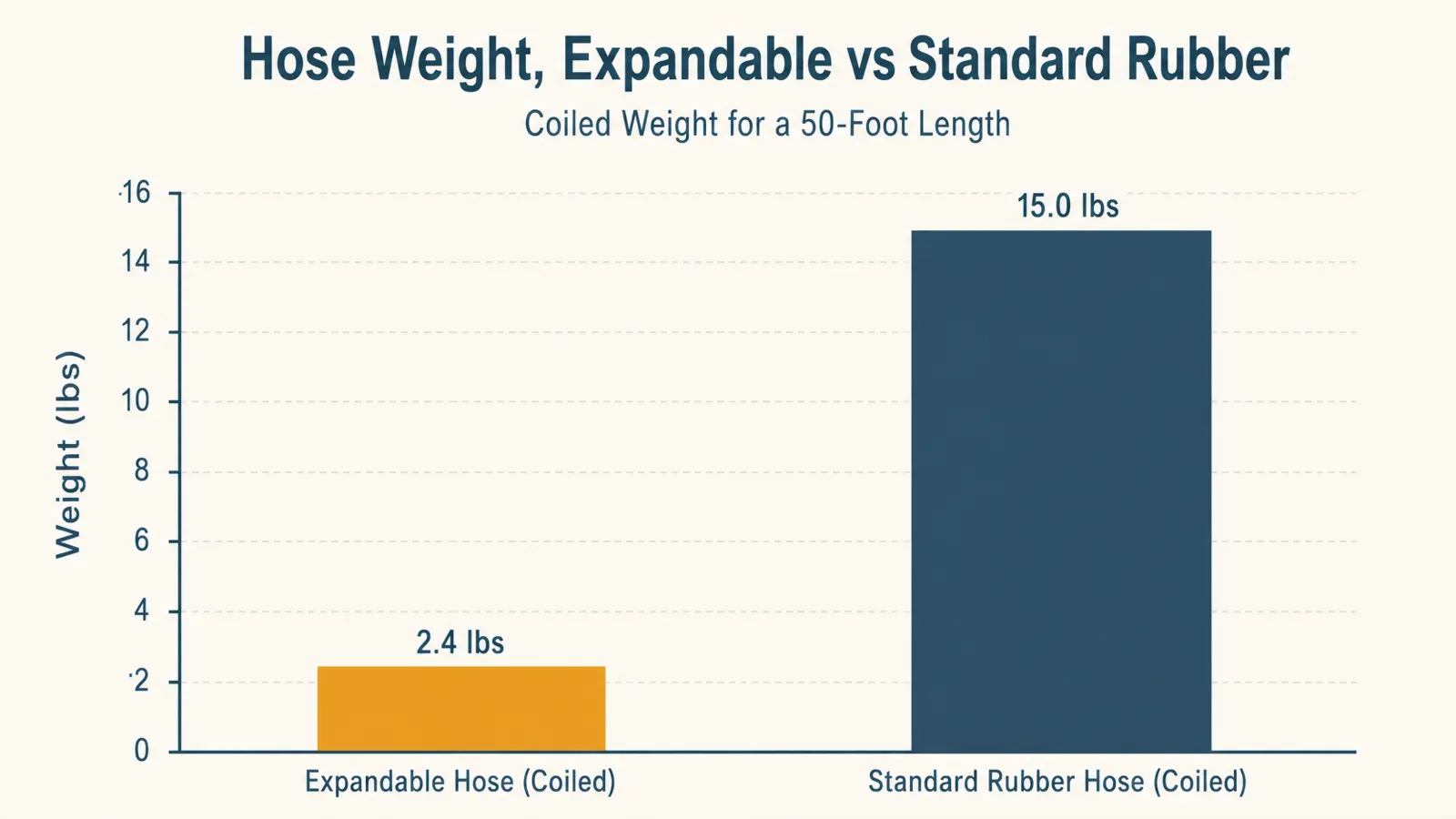
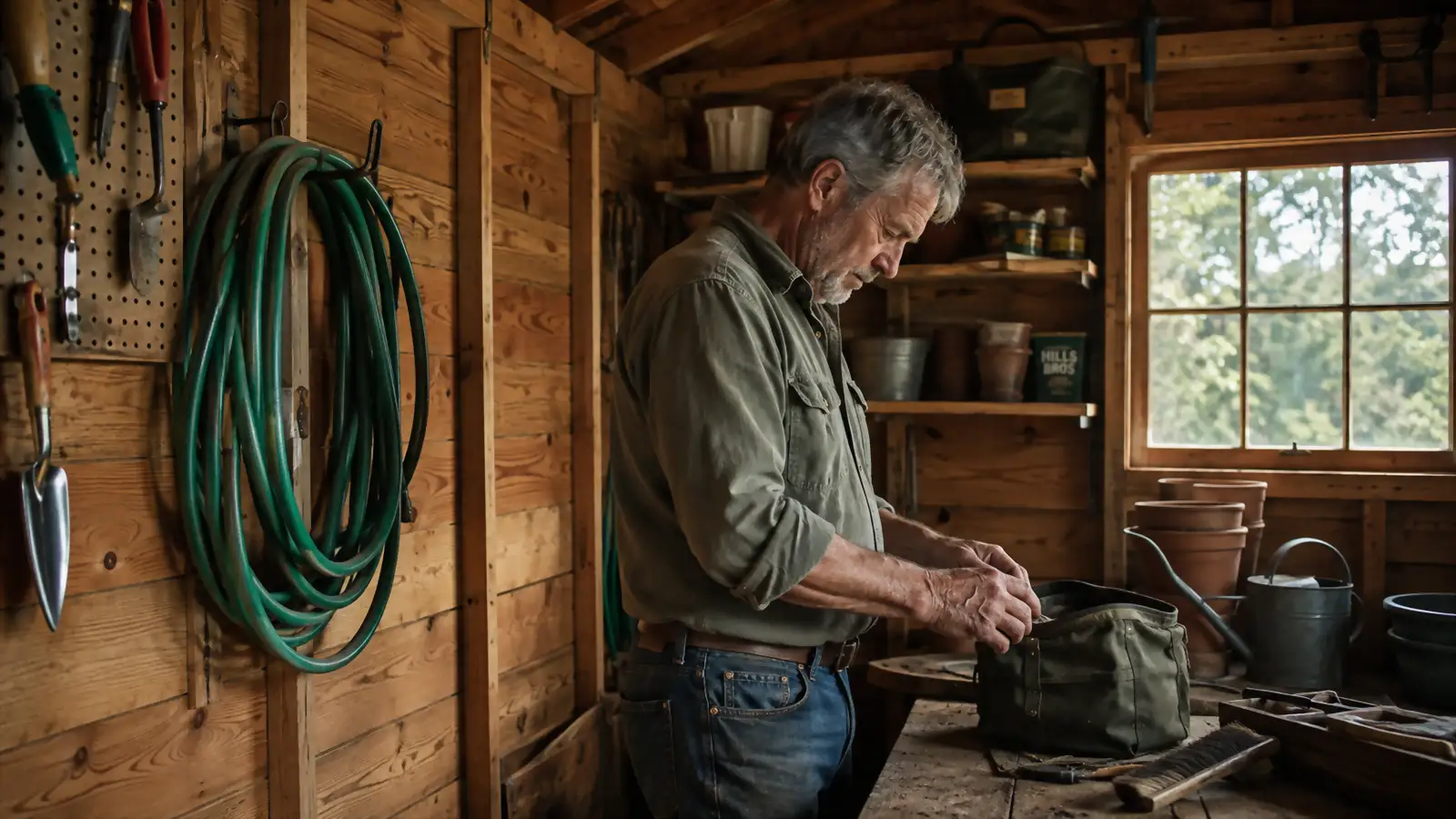
If there's one thing that kept the Flexi Hose in rotation even after I saw that split coming, it's storage. My old rubber hose lived on a big reel that took up a corner of the shed and still managed to be a wrestling match every time I wound it back up. The Flexi Hose collapses down small enough that I hang it on a single hook on the pegboard wall, coiled loosely, and it takes up maybe a third of the space. For a 10x12 shed where every foot of wall space matters, that's not nothing.
The lighter weight also meant less strain hauling it out and back every day, which over eight months of daily watering adds up to a noticeable difference in how tired my shoulder felt by evening. I've had seasons where a heavy hose left my arm stiff by July. This past season, that just didn't happen, and I credit the Flexi Hose specifically for that, not the watering routine itself, since the routine barely changed year over year.
I go into more detail on the specific pros and cons in the honest review, including a closer look at the nozzle that comes bundled with it and how it compares against a couple of other nozzles I've tried. And if you're trying to decide whether an expandable hose is worth trying at all before you commit to a specific brand, I laid out the broader case in 10 reasons an expandable hose earns a spot by the spigot, which covers the category more generally.
What I Liked
- Noticeably lighter than a standard rubber hose, easier on the shoulder over a full season
- Collapses down small enough to hang on a single shed hook, freeing up real wall space
- Solid brass fittings held up all season with no leaks at the spigot connection
- Resists kinking on tight turns around raised beds far better than rigid rubber hoses
- Made daily watering feel like less of a chore, especially for someone dealing with shoulder fatigue
Where It Falls Short
- Developed a bulge and eventually a small split near the fitting collar after about six months of regular use
- Not built to outlast a rubber hose long term, expandable hoses as a category share this weak point
- The fabric outer sleeve shows wear faster than the inner tube does, which can be hard to catch early
- Water pressure drops off somewhat once the hose is fully expanded at the far end of its length
- Listing rating runs lower than the other tools I've reviewed on this site, and my season backs that up
The Flexi Hose isn't the hose that outlives you. It's the hose that makes the daily job lighter for as long as it lasts, and for me that was most of a growing season before it started to show real wear.
Who This Is For
If your back or shoulders complain about hauling a heavy hose, or you're short on shed space and tired of wrestling a hose reel into a corner, the Flexi Hose solves both problems well for a season or two. Anyone watering raised beds, container gardens, or a smaller yard where the hose doesn't have to survive years of hard commercial use will get real value out of it, especially in that first season when everything about it feels like an upgrade.
Who Should Skip It
If you want a hose you buy once and forget about for a decade, this isn't it, and I'd rather tell you that plainly than let you find out the way I did. Anyone with a large property, a lot of daily watering demand, or a habit of dragging a hose across gravel or rough edges should expect the fabric sleeve to wear faster than the brand's marketing suggests. A traditional rubber hose, heavy as it is, is still the better bet if longevity matters more to you than weight.
Worth Trying, With Eyes Open About What a Season Actually Looks Like
The Flexi Hose made daily watering lighter on my shoulder for most of a growing season. See today's price and the current rating on Amazon before you decide if that tradeoff makes sense for your yard.
Amazon Check Today's Price on Amazon →