

Every spring for the last three years, I've been out along the back fence line of my half-acre outside Burlington, North Carolina, with a BLACK+DECKER string trimmer in hand, working through the tall stuff that grows up against the chain link before the mower ever gets near it. I picked up the BLACK+DECKER 14-inch 2 in 1 trimmer and edger, the BESTA510, three seasons back after my old gas trimmer finally gave up the ghost, and I haven't looked back. This review covers what three seasons of trimming fence lines, edging the drive, and cleaning up around the two raised beds Delia and I built back in 2019 actually looks like with this machine.
Before this trimmer, I ran a gas-powered model for close to a decade, and I got tired of the ethanol gas going stale in the shed over winter, the pull cord fighting me every spring, and the fumes when I fired it up near the raised beds. The BLACK+DECKER trimmer plugs into the same outdoor outlet I use for the hedge trimmer, and on trimming day I just uncoil the extension cord, clip it through the retention hook, and go. That switch alone changed how often I actually get out there and do the edging instead of putting it off.
The Quick Verdict
After three seasons, the BLACK+DECKER 14-inch trimmer and edger has earned its spot on the pegboard. It won't out-muscle a heavy-duty gas trimmer in thick brush, but for fence lines, bed edges, and everyday trimming, the auto feed and the tool-free edger conversion have made it the one I reach for first.
Amazon Check Today's Price →Tired of Yanking a Pull Cord Before You Can Even Start Trimming?
I got rid of the stale gas and the dead pull cord the day I plugged this one in instead. See today's price and the current rating on the BLACK+DECKER 14-inch trimmer and edger for yourself.
Amazon Check Today's Price on Amazon →How I've Used It
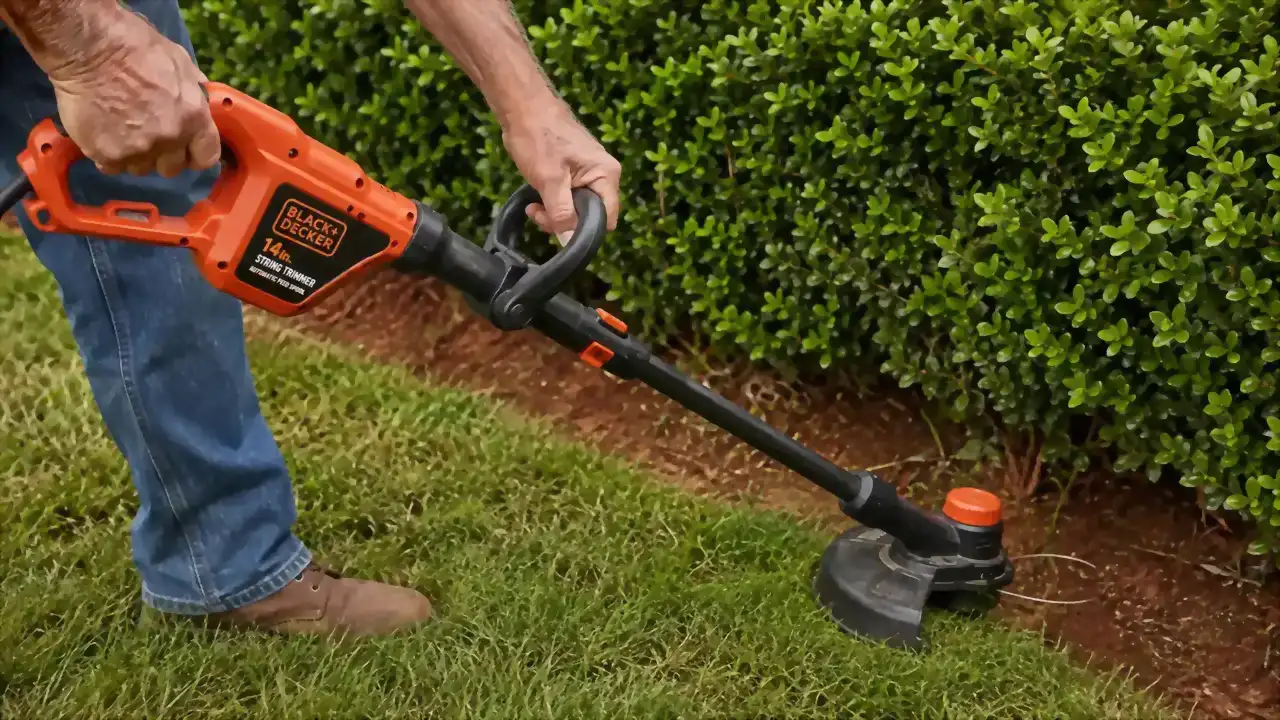
I'm not running a landscaping crew, I'm one retired man keeping a half-acre in shape from March through November, with Sawyer, nine, and June, six, tagging along more seasons than not. The BLACK+DECKER trimmer handles three regular jobs for me: cutting the tall grass and weeds along the fence line at the back of the lot, trimming around the boxwood row that runs the length of the drive, and edging the borders of the two raised beds so they don't creep into the lawn.
A typical week in peak season has me out with it for twenty to thirty minutes, longer if I'm doing a full edging pass along the drive too. The 14-inch cutting swath covers a fence line pass in about half the time my old, narrower trimmer took, and because it's corded I'm not thinking about whether the battery or the gas tank has enough left to finish the job. I just go until I'm done.
The slope at the back of my lot is the real test for any trimmer I own, because that's where the fescue gets away from me fastest and where a machine with weak string feed or a bogging motor shows its limits. The BLACK+DECKER has handled that slope through three full growing seasons without stalling out on me, even when the grass has gotten ahead of schedule after a stretch of rain kept me out of the yard.
The Auto Feed, and Why It Actually Matters
The feature I noticed first, and the one that's kept me from grumbling under my breath every ten minutes, is the automatic feed. Bump feeds were what I grew up using, where you tap the head against the ground to release more line, and half the time you'd tap too hard and dump six extra inches you didn't need or too soft and get nothing. The BLACK+DECKER auto feed releases line as it wears down on its own, so I'm not stopping every few minutes to fuss with it.
It isn't flawless. On a couple of occasions when I've run the trimmer through thicker weed stalks along the fence, the line has worn down faster than the auto feed keeps up with, and I've had to stop and manually feed more out by hand. That's happened maybe four or five times across a full season of regular use, not often enough to change my opinion of the tool, but often enough that I mention it because a review that skips the annoying parts isn't honest.
Restringing the spool itself is straightforward, which matters because I do it every few weeks in peak trimming season. The line feeds from a single spool of pre-wound line you drop in, no winding by hand the way some of the older trimmers I've owned required. I keep two spare spools on the pegboard in the shed so I'm never caught mid-job with an empty head.
Corded Power: What I Gave Up and What I Got Back
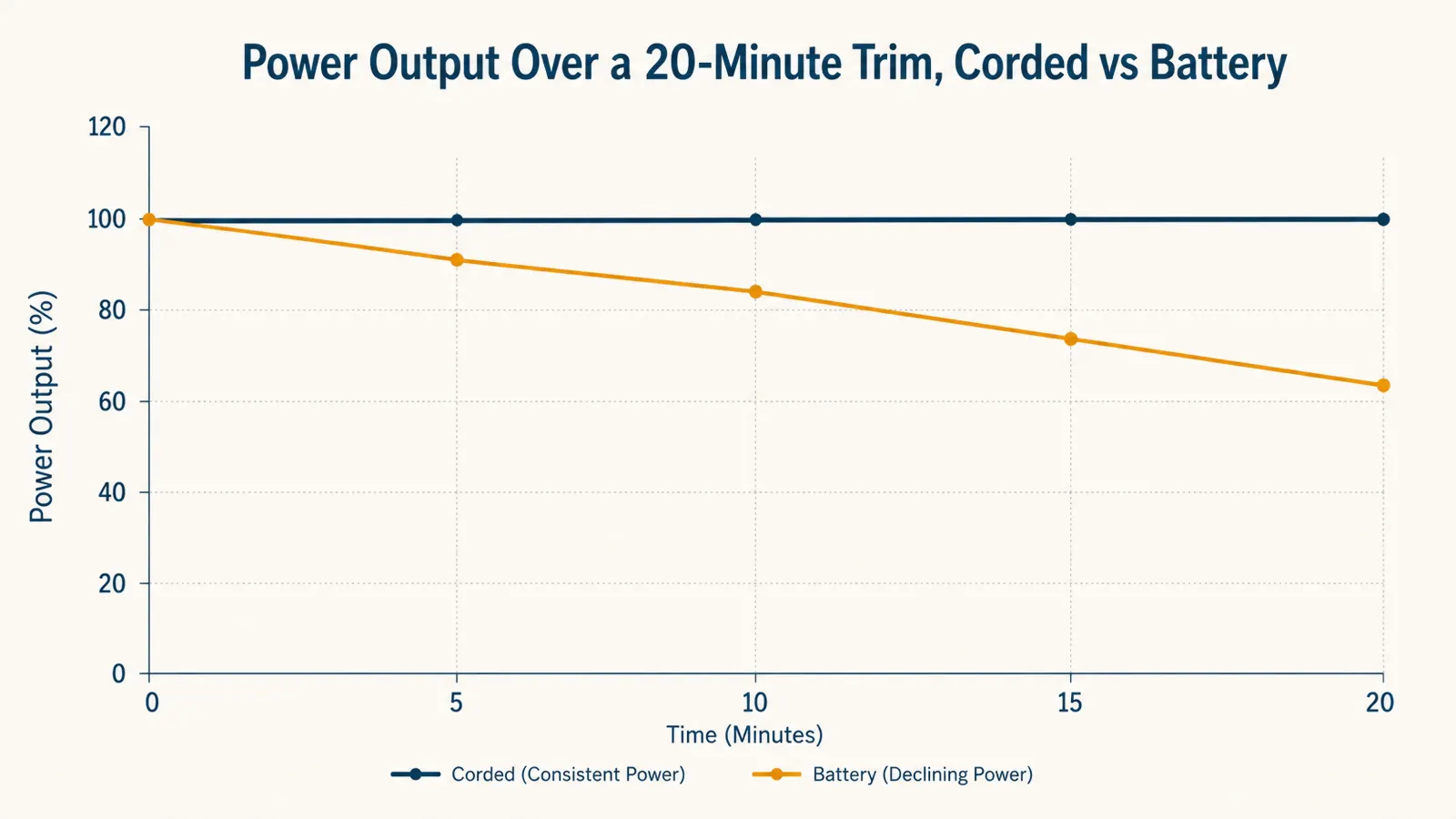
This is a 6.5-amp corded electric trimmer, not a battery model, and that was a deliberate tradeoff when I bought it. I gave up the freedom to walk anywhere in the yard without thinking about a cord, and in exchange I got a motor that never loses power as a charge drains down. Every battery trimmer I've tried starts strong and gets noticeably weaker in the last quarter of its runtime, right when you're finishing the toughest patch. The BLACK+DECKER pulls the same at the end of a job as it does at the start, because it's drawing straight off the outlet.
The cord is the real limiting factor, and I won't pretend otherwise. My half-acre lot means I run a hundred-foot extension cord from the outlet by the shed to reach the back fence line, and managing that cord around the boxwoods and the raised beds takes more attention than I'd like some days. I've caught it on a corner of a raised bed more than once and had to backtrack and free it before I could keep going.
For a yard bigger than mine, or one with more obstacles between the outlet and the far corners, I'd think twice about a corded trimmer. For my half-acre, with an outlet at the shed roughly centered on the property, it's been a manageable tradeoff, and the power I get for it, especially on that back slope, has been worth the extra step of laying out a cord before I start.
The Edger Conversion: One Tool Doing Two Jobs
The 2 in 1 part of the name refers to the tool-free conversion from trimmer to edger, and it's the feature that's actually changed what I do in the yard, not just how I do it. Before I owned this, edging the drive and the raised beds was a separate job I did with a half-moon edger a couple of times a season, if I got around to it. Now the BLACK+DECKER pivots on its own axis, no tools needed, and I can edge the same afternoon I trim without dragging out a second tool.
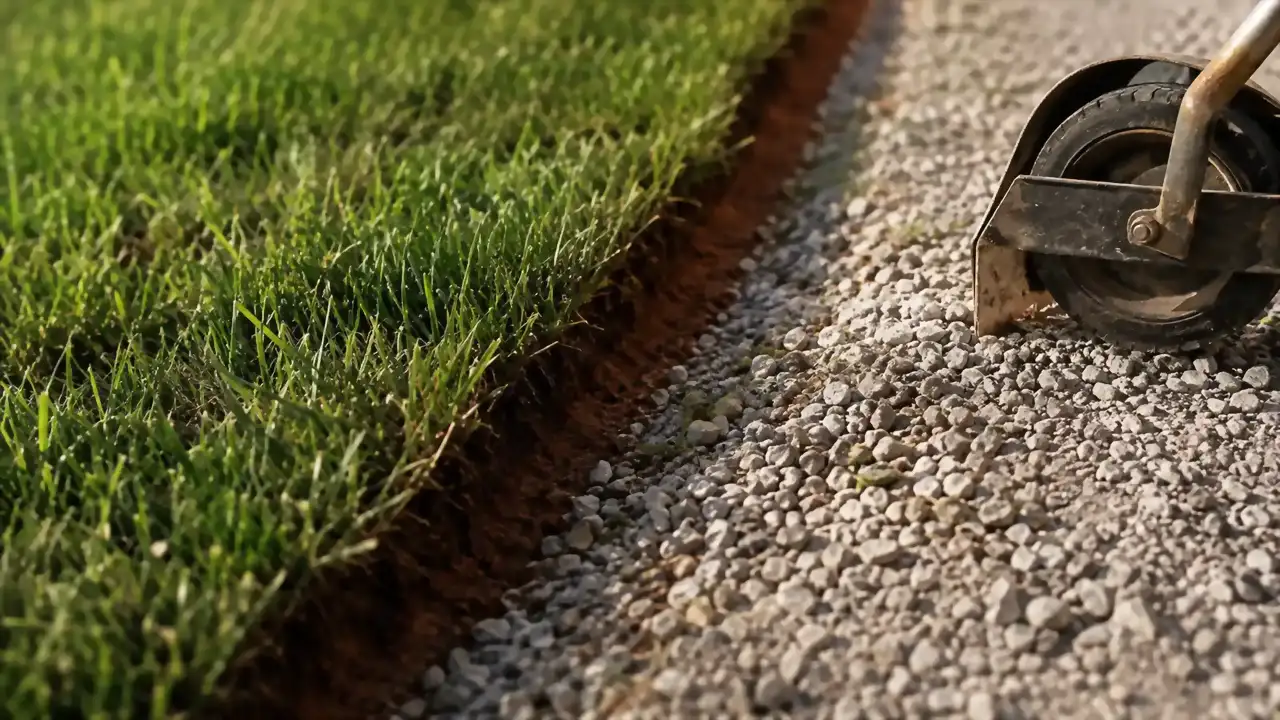
The edging cut it leaves along the drive is a clean, defined line, not a ragged approximation. I run it along the edge where the gravel drive meets the grass and along the borders of both raised beds, and the wheel that guides the edger keeps the cut straight even when my attention wanders, which it does more than I'd like to admit at seventy-one.
The conversion itself takes maybe fifteen seconds, rotating the head and locking it into the edging position, and I've never had it slip back into trimmer mode mid-job. It's a small thing, but it's the kind of small thing that decides whether a tool actually gets used for both jobs or just sits configured one way because switching it over is a hassle.
Weight, Noise, and How My Hands Feel After an Hour
Weight matters more to me at seventy-one than it used to. The trimmer is light enough that I can hold it out along the fence line without my shoulder complaining before I'm done, which wasn't true of the gas trimmer I retired. The balance sits close to the handle grip rather than out toward the head, so I'm not fighting the weight of the motor the whole time I'm swinging it side to side.
Noise is the other thing nobody mentions until they own one. It's quieter than any gas trimmer I've run, quiet enough that I can hear Delia calling from the porch without cutting the motor first, and quiet enough that the grandkids don't need to keep as much distance as they would with a two-stroke engine running. It still throws up its share of grass clippings and dust, so I keep safety glasses on regardless.
After a full hour of trimming and edging combined, which is close to the longest single session I ever put it through, my hand and forearm feel normal, not cramped the way they used to after a long stretch with the gas trimmer's vibration working through the handle. That's not a small thing when you're out there several days a week for nine months of the year.
Three Seasons In, What's Actually Held Up
I bought this trimmer three seasons ago now, and I've run it through three full growing seasons of Piedmont red clay, fence line grass, and boxwood edging. The housing has picked up scuffs from brushing against the fence posts and one good scrape from where I set it down too close to the tailgate of my truck, but nothing's cracked and nothing rattles loose that shouldn't.
The one part I've had to replace is the spool cover, which cracked at the tab after I dropped the head on the gravel drive trying to catch a line jam one-handed. A replacement cover snapped back into place easily enough, but it's worth knowing the plastic housing around the spool is the part most likely to take damage if you're rough with it the way I occasionally am.
Setting cost aside since I'd rather not dwell on it, what I will say is that between a corded motor that never needs gas or a battery replacement, and three seasons without a major repair, it's proven a lower-hassle tool to own than either the gas trimmer it replaced or the battery models a couple of neighbors down the road have complained about needing new battery packs for after only a couple of years.
For the full breakdown of every gripe I have with it, including a couple of things about the cord length I didn't love, I wrote up a more unfiltered take in my honest review of this trimmer. And if you just want the short version of why it's stayed on my pegboard instead of getting replaced, I laid out the specific reasons in 10 reasons this trimmer earns its spot in the shed.
What I Liked
- Auto feed keeps line coming without constant bump-feeding
- Tool-free edger conversion means one tool covers two jobs
- Corded power stays consistent through the whole job, no battery fade
- 14-inch cutting swath clears a fence line pass faster than narrower trimmers
- Edging wheel keeps a straight line along the drive and raised beds
Where It Falls Short
- Corded design limits range and means managing a long extension cord
- Auto feed can fall behind in thick weed stalks and need a manual assist
- Spool cover is plastic and can crack if the head takes a hard knock
- Not built for heavy brush the way a gas trimmer is
The tool I actually use every week isn't the one with the most power on paper. It's the one that's ready to go the second I plug it in, no pull cord, no stale gas, no fuss.
Who This Is For
If you've got a yard with fence lines, bed borders, or a drive that needs a clean edge kept up regularly, and you're within reach of an outdoor outlet, this trimmer earns its keep. Anyone tired of a gas trimmer's maintenance, or a battery trimmer that fades halfway through a job, will notice the difference the first time they use it. It's also a fair fit for anyone who wants one tool instead of two, since the edger conversion genuinely replaces a separate edging tool.
Who Should Skip It
If your property is big enough that a cord can't reasonably reach the areas you need to trim, or if you're clearing heavy brush and saplings instead of grass and light weeds, this isn't the trimmer for that job. A gas model or a heavier-duty brush cutter will handle that kind of work better than any 6.5-amp corded trimmer, this one included.
Ready to Retire the Gas Can and the Dead Pull Cord?
Three seasons in, this is still the trimmer I grab first for the fence line and the bed edges. Check today's price and the current rating on the BLACK+DECKER 14-inch trimmer and edger.
Amazon Check Today's Price on Amazon →